
"Duke’s decree"
19200 article(s) found

Introduction of South American Coffee Bean Bolivian Coffee Bean Flavor and Taste producing area
In 1932, the Chaco War broke out between Bolivia and Paraguay for oil resources in the North Chaco region. Bolivia was defeated and lost a large area of territory. The people's armed uprising broke out in April 1952, and Paisdensolo, leader of the nationalist revolutionary movement, became president. Since then, there have been frequent military coups and long-term political instability. Modern assets with South American characteristics were restored in October 1983
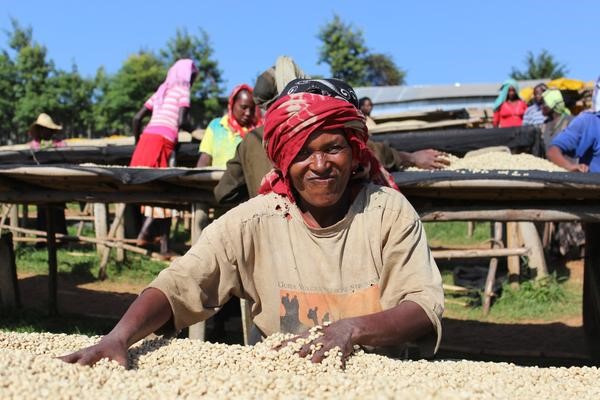
Coffee producing areas in Ethiopia, a new trend of boutique development from cooperatives to single small farmers
Professional coffee knowledge exchange more coffee bean information please follow the coffee workshop (Wechat official account cafe_style) Ethiopia Yega Xuefei producing area reputation has become so popular, even Xiao 7 coffee has begun to use it, the details should not be introduced by the editor. However, there is a new trend in the Yega Xuefei system, that is, the development of a single small farmer and a single agricultural product.

Introduction of high-quality coffee with rich and unique aroma in Bolivian coffee manor
In 1932, the Chaco War broke out between Bolivia and Paraguay for oil resources in the North Chaco region. Bolivia was defeated and lost a large area of territory. The people's armed uprising broke out in April 1952, and Paisdensolo, leader of the nationalist revolutionary movement, became president. Since then, there have been frequent military coups and long-term political instability. Modern assets with South American characteristics were restored in October 1983

The years when coffee culture cafes were banned
A cup of coffee has been drunk for 350 years-in the days when cafes were banned, modern people can drink coffee as they like, but coffee has had a rough ban in history. It is said that the world's first ban on cafes can be traced back to the holy place of Mecca in 1511. The rulers thought that the parties on the coffee shop table would threaten their authority and closed all the cafes in the city.

Colonial Coffee Garden, a microcosm of cosmopolitanism
Modern people can drink coffee as much as they like, but there has been a rough ban on coffee in history. It is said that the world's first ban on cafes can be traced back to the holy place of Mecca in 1511. The rulers thought that the parties on the coffee shop table would threaten their authority and closed all the cafes in the city. As a result, the ban was repealed automatically because the Sultan fell in love with drinking coffee. At the beginning
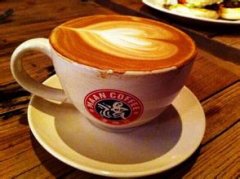
Common sense of Coffee Culture Cafe was banned
Modern people can drink coffee as much as they like, but there has been a rough ban on coffee in history. It is said that the world's first ban on cafes can be traced back to the holy place of Mecca in 1511. The rulers thought that the parties on the coffee shop table would threaten their authority and closed all the cafes in the city. As a result, the ban was repealed automatically because the Sultan fell in love with drinking coffee. At the beginning

Darjeeling black tea is produced in which country? What is the annual output of Darjeeling black tea?
Darjeeling, Xizang Dorje Ridge, city, northernmost West Bengal, northeastern India. It is located about 305miles (490km) north of Calcutta and about 7000 feet (2100 m) above sea level. Darjeeling is located on a narrow ridge of the Sikkim Himalayas. It suddenly falls to Dalangi.

The music played by Starbucks coffee shops, like the smell of coffee, must be strictly controlled
Professional coffee knowledge exchange more coffee bean information please follow the coffee workshop (Wechat official account cafe_style) Starbucks coffee beans Chinese people pay attention to coffee, has a long history. To be fair, Starbucks coffee doesn't necessarily take advantage of us in terms of taste alone. However, if you look at in-store music, Starbucks will

Coffee Culture History Cafe was banned in the years
Modern people can drink coffee as much as they like, but there has been a rough ban on coffee in history. It is said that the world's first ban on cafes can be traced back to the holy place of Mecca in 1511. The rulers thought that the parties on the coffee shop table would threaten their authority and closed all the cafes in the city. As a result, the ban was repealed automatically because the Sultan fell in love with drinking coffee. At the beginning

German ROSENTHAL Rosenthal Coffee Cup
Arzberg Town, whose full name is Porzellanfabrik Arzberg, is famous all over the world for its strong design style. The world's first porcelain factory was established in 18-38 and became a global pioneer in porcelain production. Arzberg brand was officially established in 1887 and Arzberg joined Hutschenr-euther AG Group, the largest porcelain tableware maker in Europe in 1972. Durability is the characteristic of Arzberg
Introduction to the characteristics of the manor producing area of Burundian boutique coffee beans
The national flag of Burundi is rectangular and the ratio of length to width is 5:3. Two crossed white wide stripes divide the flag into four triangles, the upper and lower two are equal in red, and the left and right two are equal in green. In the center of the flag is a white circle with three red hexagonal stars with green edges in a zigzag arrangement. Red symbolizes the blood of the victims fighting for freedom, and green symbolizes the desired progress.

Has there been a rough ban on coffee in history? Coffee history
It is said that the world's first ban on cafes can be traced back to the holy place of Mecca in 1511. The rulers thought that the parties on the coffee shop table would threaten their authority and closed all the cafes in the city. As a result, the ban was repealed automatically because the Sultan fell in love with drinking coffee. When the Venetians first brought coffee to continental Europe, Pope Clemens VIII took a sip and announced the coffee.

The development of cafes the years when cafes were banned
Modern people can drink coffee as much as they like, but there has been a rough ban on coffee in history. It is said that the world's first ban on cafes can be traced back to the holy place of Mecca in 1511. The rulers thought that the parties on the coffee shop table would threaten their authority and closed all the cafes in the city. As a result, the ban was repealed automatically because the Sultan fell in love with drinking coffee. At the beginning
A brief introduction to the planting market price of high-grade vanilla sweet Bolivian boutique coffee beans
The eastern and central part belongs to the savanna climate, the transition from the western mountain to the subtropical climate, and the inland plateau to the mountain climate. The climate in most areas is dry and cool; the annual precipitation decreases from 2000 mm to less than 100mm from northeast to west. [7] Natural resources are rich in mineral resources, including tin, antimony, tungsten, silver, zinc, lead, copper, nickel, iron, gold and so on. Abundant mineral deposits
The historical development of cafes the years when cafes were banned
Modern people can drink coffee as much as they like, but there has been a rough ban on coffee in history. It is said that the world's first ban on cafes can be traced back to the holy place of Mecca in 1511. The rulers thought that the parties on the coffee shop table would threaten their authority and closed all the cafes in the city. As a result, the ban was repealed automatically because the Sultan fell in love with drinking coffee. At the beginning

There has been a rough ban on coffee in the history of coffee culture.
It is said that the world's first ban on cafes can be traced back to the holy place of Mecca in 1511. The rulers thought that the parties on the coffee shop table would threaten their authority and closed all the cafes in the city. As a result, the ban was repealed automatically because the Sultan fell in love with drinking coffee. When the Venetians first brought coffee to continental Europe, Pope Clemens VIII took a sip and announced the coffee.

There has been a rough ban on coffee in the history of coffee culture.
It is said that the world's first ban on cafes can be traced back to the holy place of Mecca in 1511. The rulers thought that the parties on the coffee shop table would threaten their authority and closed all the cafes in the city. As a result, the ban was repealed automatically because the Sultan fell in love with drinking coffee. When the Venetians first brought coffee to continental Europe, Pope Clemens VIII took a sip and announced the coffee.

The basic knowledge of Cafe Culture in the years when Cafe was banned
Modern people can drink coffee as much as they like, but there has been a rough ban on coffee in history. It is said that the world's first ban on cafes can be traced back to the holy place of Mecca in 1511. The rulers thought that the parties on the coffee shop table would threaten their authority and closed all the cafes in the city. As a result, the ban was repealed automatically because the Sultan fell in love with drinking coffee. At the beginning